Project
AI-Powered Image Analysis for Quality Control (Manufacturing)
Role AI Systems Architect
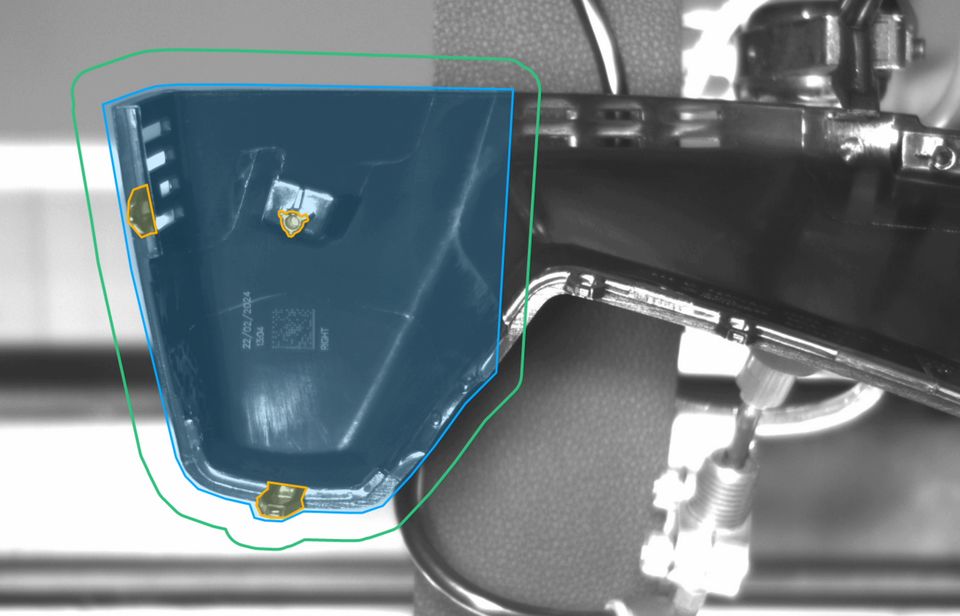
Summary
This AI-powered quality control system was designed to revolutionize manufacturing defect detection by integrating computer vision, deep learning, and industrial automation into high-speed production lines. Using real-time object detection (YOLOv8, TensorFlow) and edge AI processing (NVIDIA Jetson), the system automatically identifies sub-millimeter defects (less than 0.5 mm) and missing components, ensuring zero-defect manufacturing without slowing production. By seamlessly integrating with robotic arms, defective parts are instantly removed, while a cloud-based dashboard provides real-time analytics and defect trend tracking, allowing engineers to optimize manufacturing efficiency and process quality. The result is a fully automated, scalable AI-driven quality control solution that reduces defect rates to 0 PPM, improves production speed by 30%, and minimizes waste, positioning the client at the forefront of smart manufacturing and industrial AI innovation.
Challenges
- Manufacturing Defect Detection at Sub-Millimeter Precision The client’s manual quality control process led to undetected defects (less than 0.5 mm), product recalls, and high rejection rates, impacting cost and reputation.
- Real-Time, High-Speed Defect Classification Without Slowing Production Existing human inspection was a bottleneck, requiring an automated system that could detect defects in milliseconds, ensuring zero disruption to the production line.
- Integration with Industrial Robotics & Automated Sorting The AI system had to interface with robotic arms, triggering instant defect removal, and providing actionable insights to engineers for process optimization.
- Scalable Cloud & Edge Computing Balance The solution required hybrid AI processing, running real-time inference on edge devices (NVIDIA Jetson) while logging trends and insights to the cloud for long-term analysis.
Solution
- AI-Powered Quality Control System for Sub-Millimeter Defect Detection Deployed a deep learning model (YOLOv8, TensorFlow) to identify defects less than 0.5 mm, achieving real-time image classification at 30+ FPS.
- Edge AI Processing for Ultra-Low Latency Integrated an NVIDIA Jetson processing unit, performing on-device AI inference, ensuring instant defect detection without cloud delays.
- Automated Defect Handling & Production Line Integration Connected AI outputs to robotic arms, enabling automated removal of defective products, improving efficiency and minimizing human intervention.
- Cloud-Based Analytics Dashboard for Quality & Efficiency Tracking Developed a real-time monitoring dashboard, aggregating defect rates, trend analysis, and process inefficiencies, helping engineers optimize production workflows.
- Continuous AI Model Refinement & Adaptive Learning Leveraged synthetic dataset augmentation and real-world defect images, improving model robustness across lighting conditions and defect variations.
Impact
- Reduced defect rates to 0 PPM (Zero Defects), assuring clients of precision-manufactured parts (zero complaints).
- Production speed increased by 30%, eliminating manual inspection bottlenecks.
- Defect trend analytics led to proactive manufacturing optimizations, reducing material waste and improving operational efficiency.
- Automated real-time AI inference reduced cloud costs by 85%, optimizing the balance between edge and cloud processing.
- Scalability enabled multi-factory deployment, ensuring consistent quality control across all production sites (20+ factories world wide).
How it was built
- AI & Computer VisionTensorFlow, OpenCV, YOLOv8 for real-time defect detection and classification.
- Edge AI ProcessingNVIDIA Jetson Xavier/Orin for on-device inference, reducing cloud latency.
- BackendPython (FastAPI) for high-performance model inference API and defect logging.
- Cloud InfrastructureAWS Lambda for on-demand AI model processing, S3 for image and defect data storage, and CloudWatch for real-time monitoring.
- DatabasePostgreSQL for defect tracking, analytics, and production insights.
- Security & ComplianceGDPR-compliant data handling, encrypted data transmission, and secure industrial network integration.
- MethodologiesIterative AI model training, synthetic dataset augmentation, transfer learning for improved accuracy, and MLOps for continuous model improvement.
Contact
Before you commit the budget, let's make sure the plan makes sense.
Book a 30-minute call. We'll discuss the investment you're considering, the decisions you need to make, and whether the Sprint is the right fit.
Book a callThe booking will ask:
- What you're considering building or changing
- The approximate investment
- When you need a decision
Prefer email? Write to hello at pedrobalas dot com